
Pattern For Prime Numbers
Pattern For Prime Numbers - Web $\begingroup$ prime pattern breaks on the number it is, if prime. Web the probability that a random number $n$ is prime can be evaluated as $1/ln(n)$ (not as a constant $p$) by the prime counting function. Web can you recognize the prime numbers in this group of numbers? Web a curious pattern in polar plots with prime numbers, together with discussion of dirichlet's theorem Web by translating nature into the code of numbers we have revealed hidden structures and patterns that control our environment. Which are prime, composite, or neither? A few conditions are necessary in order for f(n) to be prime in nitely often when n 2z + : Web two mathematicians have found a strange pattern in prime numbers—showing that the numbers are not distributed as randomly as theorists often assume. Web a $1 million prize has been awarded to a mathematician for work that could one day unlock the secrets of prime numbers. If we know that the number ends in $1, 3, 7, 9$; Web a curious pattern in polar plots with prime numbers, together with discussion of dirichlet's theorem Web two mathematicians have found a strange pattern in prime numbers — showing that the numbers are not distributed as randomly as theorists often assume. Start at 3/1 and right to 9/2, down to 15/2, right to 55/6, down to 77/6, right to 175/12, down to 275/12, right to 1507/60, down to 1781/60, right to 637/20, down to 833/20, right to 6171/140, down to 6897/140. The king of norway will officially present the prestigious abel prize in. This probability becomes $\frac{10}{4}\frac{1}{ln(n)}$ (assuming the classes are random). For example, the first 5 prime numbers are 2, 3, 5, 7, and 11. They prefer not to mimic the final digit of the preceding prime, mathematicians have discovered. Web the way these numbers are distributed resembles a pattern scientists have observed in atom distribution in crystals. Web prime numbers, divisible only by 1 and themselves, hate to repeat themselves. Web primes, the numbers divisible only by themselves and 1, are the building blocks from which the rest of the number line is constructed, as all other numbers are created by multiplying primes. Web can you recognize the prime numbers in this group of numbers? Until last night, though many (all over the world) have tried, no one had cracked this prime prediction equation. Start at 3/1 and right to 9/2, down to 15/2, right to 55/6, down to 77/6, right to 175/12, down to 275/12, right to 1507/60, down to 1781/60, right. Start at 3/1 and right to 9/2, down to 15/2, right to 55/6, down to 77/6, right to 175/12, down to 275/12, right to 1507/60, down to 1781/60, right to 637/20, down to 833/20, right to 6171/140, down to 6897/140. This probability becomes $\frac{10}{4}\frac{1}{ln(n)}$ (assuming the classes are random). Web prime numbers, divisible only by 1 and themselves, hate to. Web a $1 million prize has been awarded to a mathematician for work that could one day unlock the secrets of prime numbers. Web two mathematicians have found a strange pattern in prime numbers — showing that the numbers are not distributed as randomly as theorists often assume. For example, the first 5 prime numbers are 2, 3, 5, 7,. Web can you recognize the prime numbers in this group of numbers? Web qualitative prime patterns for a single polynomial let f(x) be a nonconstant polynomial with integer coe cients, such as 11x+6 or x 2 +1. Web i've read about many attempts to find patterns in prime numbers. First, is there a mathematical way to prove there is not. Which are prime, composite, or neither? Web a curious pattern in polar plots with prime numbers, together with discussion of dirichlet's theorem Since there are ways to check if a number is prime or not, can these methods be combined into some large function that produces prime numbers? Web a $1 million prize has been awarded to a mathematician for. By contrast, numbers with more than 2 factors are call composite numbers. Until last night, though many (all over the world) have tried, no one had cracked this prime prediction equation. Web the way these numbers are distributed resembles a pattern scientists have observed in atom distribution in crystals. Web the idea is to start with an array of primes. By contrast, numbers with more than 2 factors are call composite numbers. Web in this video, we explore the pattern to prime numbers. Web in addition to the work herein, the holy grail of prime number challenge has been to create a prediction equation of prime numbers emergence. Web prime numbers are numbers that have only 2 factors: A few. This probability becomes $\frac{10}{4}\frac{1}{ln(n)}$ (assuming the classes are random). Since there are ways to check if a number is prime or not, can these methods be combined into some large function that produces prime numbers? Web qualitative prime patterns for a single polynomial let f(x) be a nonconstant polynomial with integer coe cients, such as 11x+6 or x 2 +1.. Which are prime, composite, or neither? So if you follow these directions: Web primes, the numbers divisible only by themselves and 1, are the building blocks from which the rest of the number line is constructed, as all other numbers are created by multiplying primes. Web by translating nature into the code of numbers we have revealed hidden structures and. A few conditions are necessary in order for f(n) to be prime in nitely often when n 2z + : Web by translating nature into the code of numbers we have revealed hidden structures and patterns that control our environment. So if you follow these directions: Web prime numbers, divisible only by 1 and themselves, hate to repeat themselves. Until. Since there are ways to check if a number is prime or not, can these methods be combined into some large function that produces prime numbers? If they're not creating cool artworks with them or finding them in nature, they're using computers to discover increasingly larger primes. Web a $1 million prize has been awarded to a mathematician for work that could one day unlock the secrets of prime numbers. Web by translating nature into the code of numbers we have revealed hidden structures and patterns that control our environment. Web two mathematicians have found a strange pattern in prime numbers—showing that the numbers are not distributed as randomly as theorists often assume. Web $\begingroup$ prime pattern breaks on the number it is, if prime. Until last night, though many (all over the world) have tried, no one had cracked this prime prediction equation. Web primes, the numbers divisible only by themselves and 1, are the building blocks from which the rest of the number line is constructed, as all other numbers are created by multiplying primes. I go over the euler product formula, the prime number theorem and the connection between the rieman. For example, the first 5 prime numbers are 2, 3, 5, 7, and 11. Web the probability that a random number $n$ is prime can be evaluated as $1/ln(n)$ (not as a constant $p$) by the prime counting function. Web prime numbers, divisible only by 1 and themselves, hate to repeat themselves. Created by sal khan and monterey institute for technology and education. A few conditions are necessary in order for f(n) to be prime in nitely often when n 2z + : Web a curious pattern in polar plots with prime numbers, together with discussion of dirichlet's theorem This probability becomes $\frac{10}{4}\frac{1}{ln(n)}$ (assuming the classes are random).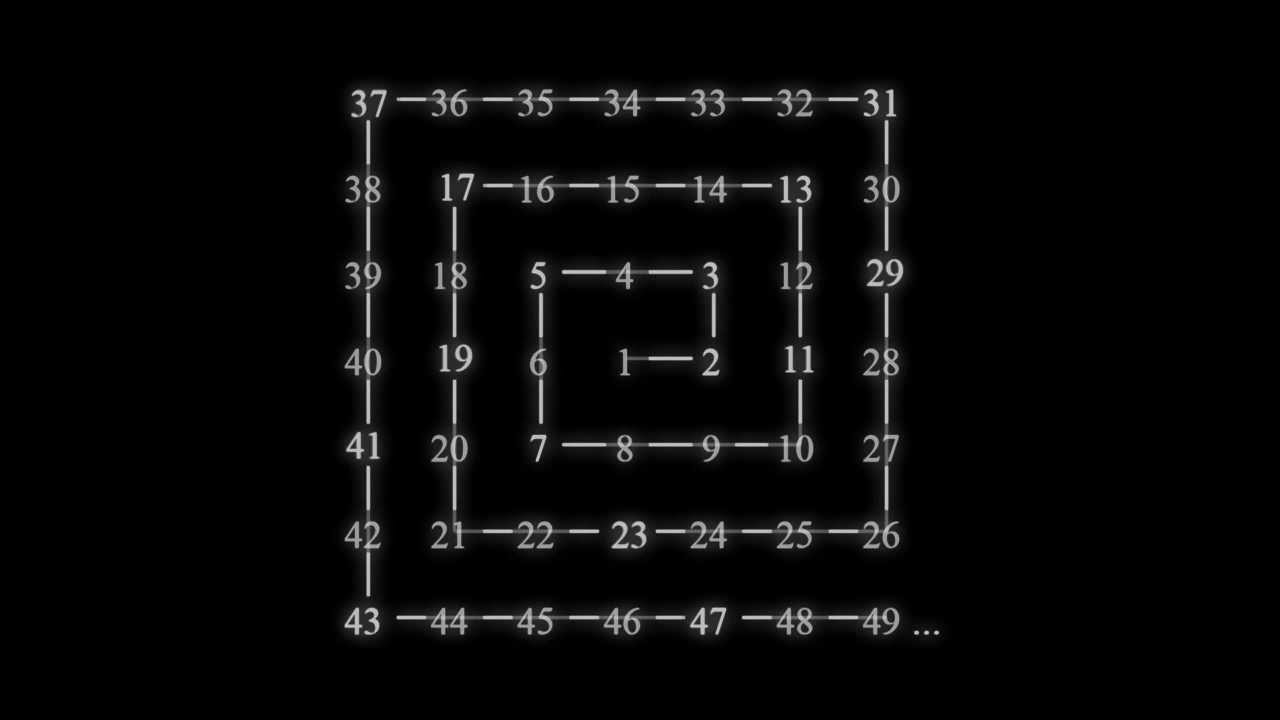
A Pattern in Prime Numbers ? YouTube

Prime Numbers Definition, Prime Numbers 1 to 100, Examples

Prime Number Patterning! The Teacher Studio Learning, Thinking, Creating
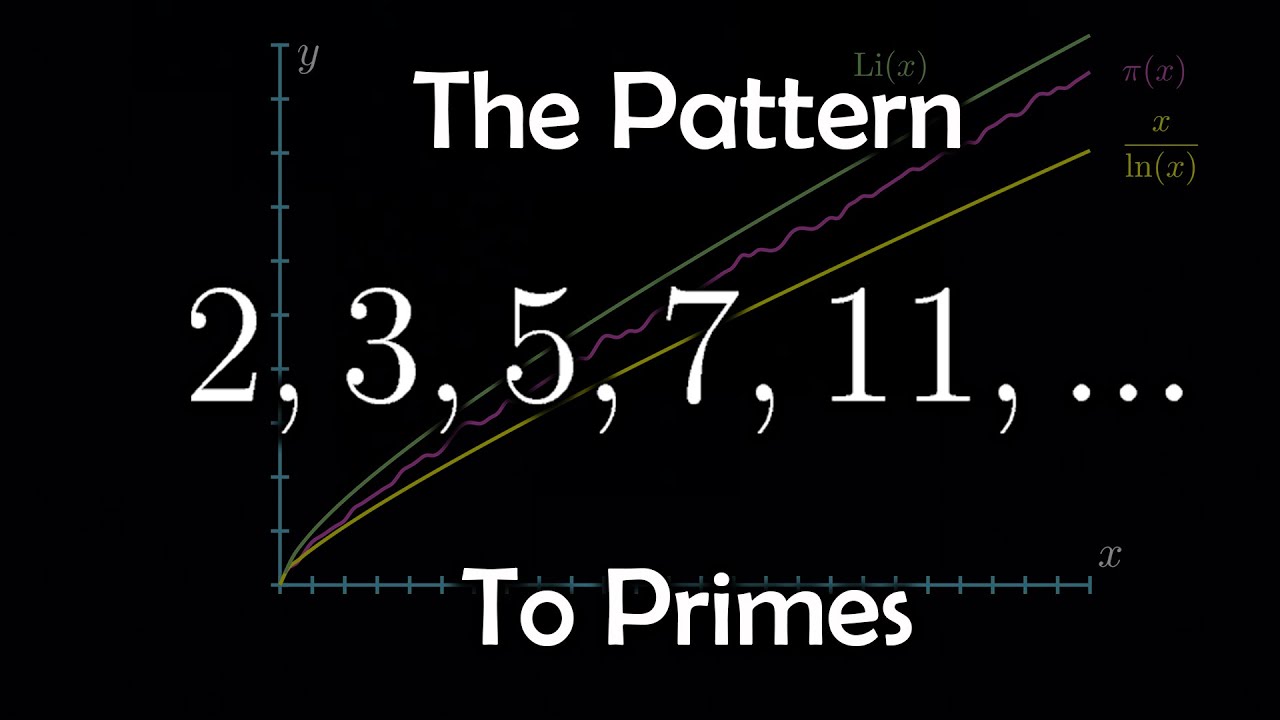
The Pattern to Prime Numbers? YouTube
![[Math] Explanation of a regular pattern only occuring for prime numbers](https://i.stack.imgur.com/N9loW.png)
[Math] Explanation of a regular pattern only occuring for prime numbers
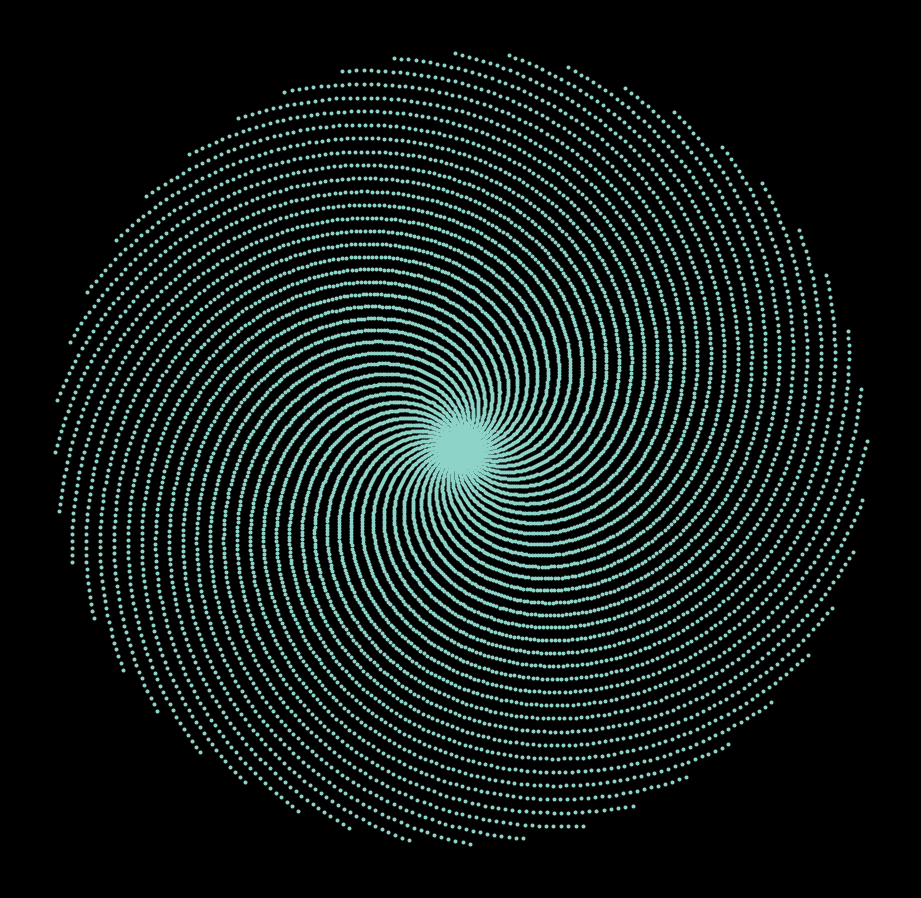
Plotting Prime Numbers Jake Tae

The Pattern in Prime Winning numbers, Math, Kalyan tips
![[Math] Primes and 32 where did this pattern come from Math Solves](https://i.stack.imgur.com/B1ZHK.png)
[Math] Primes and 32 where did this pattern come from Math Solves

Balaji Prime Number Theorem
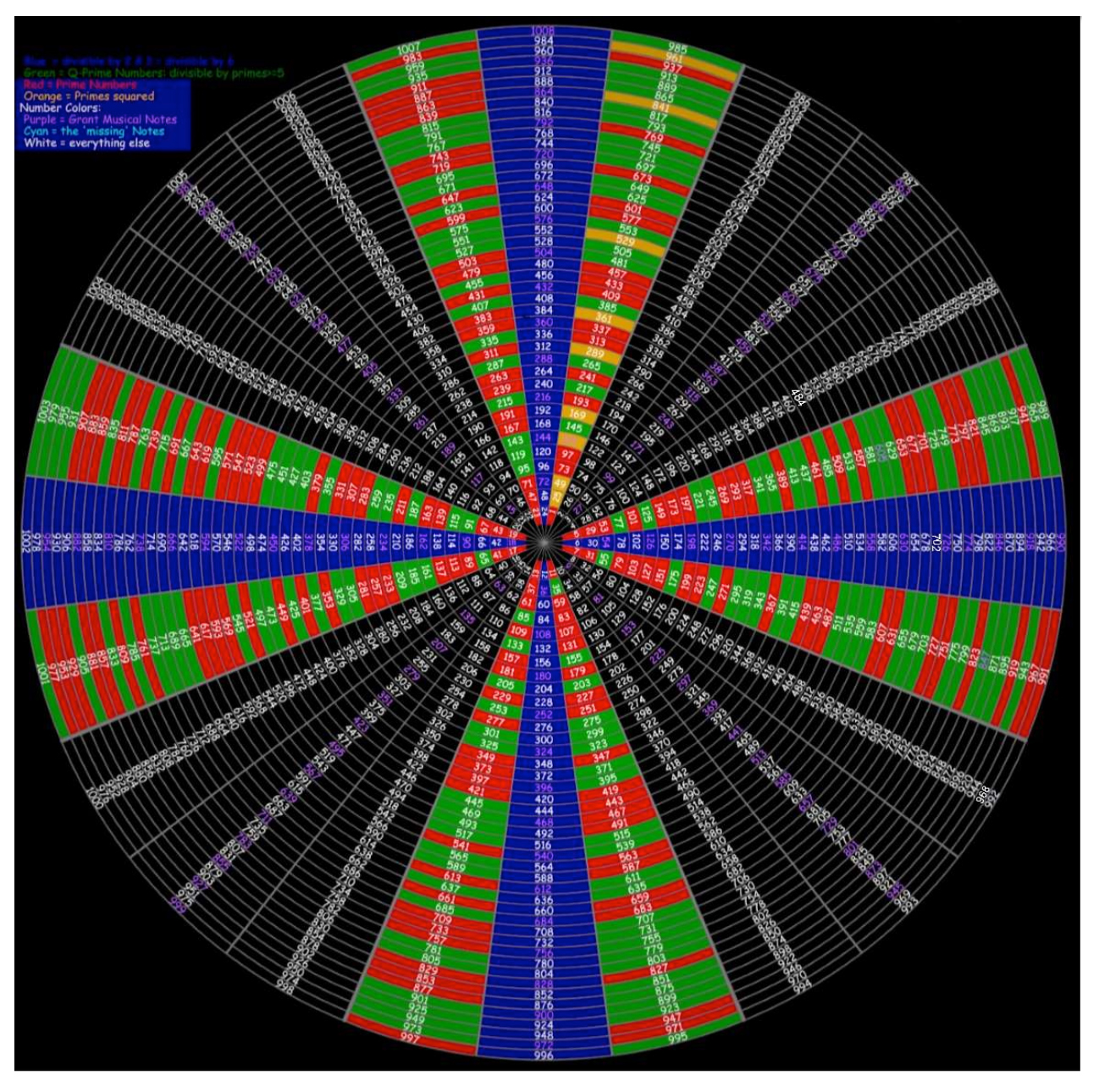
Prime Number Pattern Discovery PUBLISHED
First, Is There A Mathematical Way To Prove There Is Not A Pattern To Prime Numbers?
Start At 3/1 And Right To 9/2, Down To 15/2, Right To 55/6, Down To 77/6, Right To 175/12, Down To 275/12, Right To 1507/60, Down To 1781/60, Right To 637/20, Down To 833/20, Right To 6171/140, Down To 6897/140.
Web In This Video, We Explore The Pattern To Prime Numbers.
Then Repeat This, But Use The Prime Gaps And Find Their Gaps.
Related Post: